



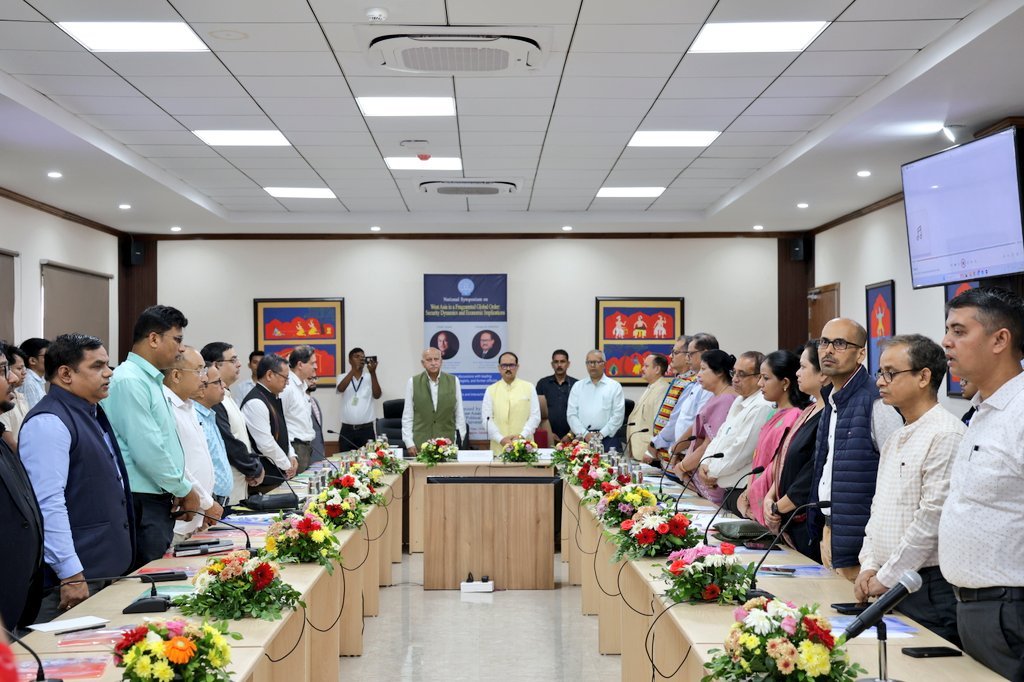
Guwahati: Former Minister of State for External Affairs M. J. Akbar on Thursday said that global power dynamics are rapidly changing, and long-standing international institutions are struggling to remain relevant in an increasingly uncertain and multipolar world. He was speaking at a national symposium on “West Asia in a Fragmented Global Order: Security Dynamics and Economic Implications” organised at Gauhati University.
In his keynote address, Akbar pointed to major shifts in the global energy and financial landscape. He noted that developments like the United Arab Emirates stepping away from OPEC signal a change in global alignments. He also highlighted growing challenges to the dominance of the US dollar, saying national interests are now taking priority over traditional alliances.
Akbar further observed that institutions such as NATO and the United Nations are finding it difficult to assert authority in the current global scenario. “The world order is again in flux,” he said, pointing to increasing strategic competition among nations.
Vice Chancellor Nani Gopal Mahanta also spoke on the occasion and highlighted growing pressure on traditional pillars of American global leadership. He said both strategic dominance and ideological influence are now being challenged, especially in regions like West Asia.
A panel discussion titled “West Asia in Transition: Power Shifts, Global Rivalries, and India’s Strategic Calculus” featured experts including Bhaskar Jyoti Mahanta, Subhrajeet Konwer, Obja Bora Hazarika and Abhijan Das. The panel discussed rising rivalries, changing power centres, and their impact on India’s foreign policy and economic interests.
Speakers stressed the need for a balanced and practical approach as India deals with a region marked by uncertainty and shifting alliances. The symposium highlighted the importance of academic discussions in understanding complex global issues, especially in strategically important regions like West Asia.