

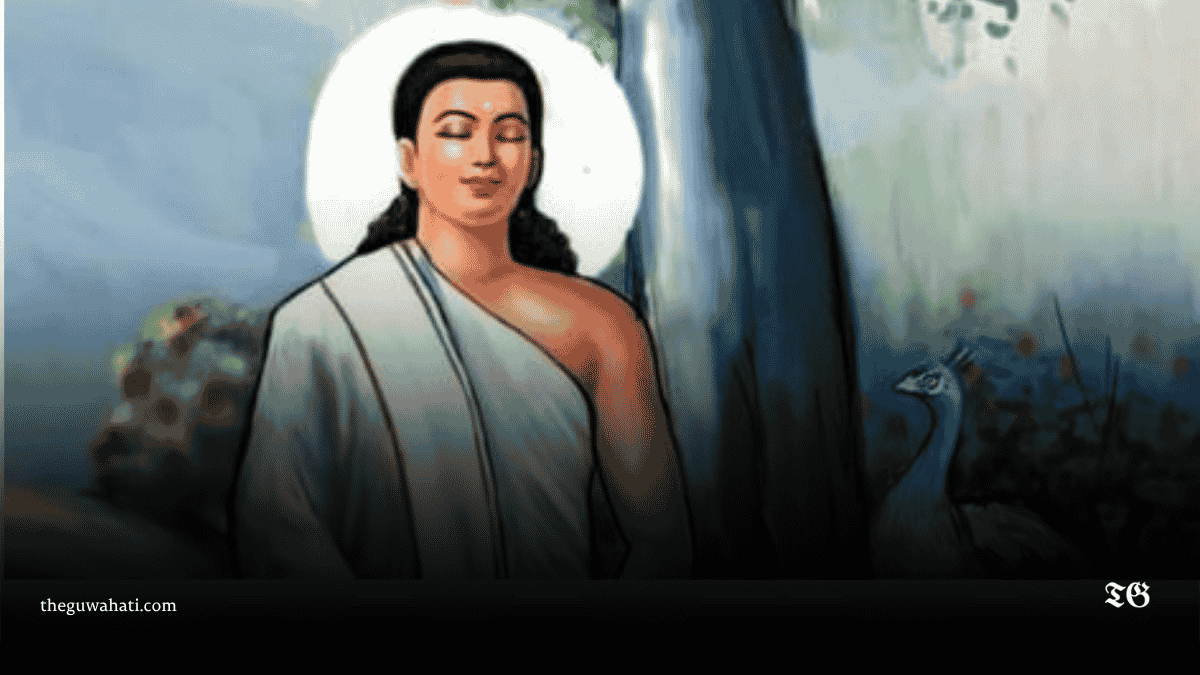
Guwahati: Assam is observing the 578th birth anniversary of Srimanta Sankardeva, the founder of Ekasarana Naam Dharma, today with religious and spiritual programmes across the state.
Preparations have been completed at satras, naamghars and religious institutions in different parts of Assam. Devotees are gathering for naam-kirtan, devotional songs and traditional rituals, creating a spiritual atmosphere across the state.
Special programmes have been organised at Batadrova Than, the birthplace of Srimanta Sankardeva, as well as at Barpeta Satra and major satras of Majuli, including Auniati, Kamalabari and Bhogpur. Several of these institutions are observing the occasion with programmes spread over multiple days.
In Guwahati, various naamghars have also organised special programmes. Devotees are offering prayers, lamps, xorai and naivedya and participating in naam-kirtan to mark the occasion.
Traditional programmes include Usha Kirtan, Bhagawat Bhraman, morning prayers, naam-kirtan, installation of religious scriptures at the Guru Asana and distribution of mah-prasad. In the evening, cultural programmes featuring Borgeet, Sattriya dance, Ankiya Nat and Bhaona will be organised at several places.
Born in 1449 at Alipukhuri in Batadrvaa, Srimanta Sankardeva made significant contributions to Assamese religion, literature, art and culture. He studied various scriptures and developed into a scholar under Mahendra Kandali.
Sankardeva is remembered not only as a religious reformer but also as a poet, playwright, composer, musician, actor and artist. Through the propagation of Ekasarana Naam Dharma, he promoted values such as equality, brotherhood and devotion.
His influence remains deeply connected with Assamese society and culture. The tradition of people from different communities gathering at naamghars for prayers, naam-kirtan and mah-prasad continues to reflect the message of social harmony associated with his teachings.
Across Assam, the birth anniversary is being observed through devotional programmes, Borgeet, traditional music, Sattriya performances and Bhaona, with people remembering Sankardeva’s contribution to Assamese society, literature and culture.