





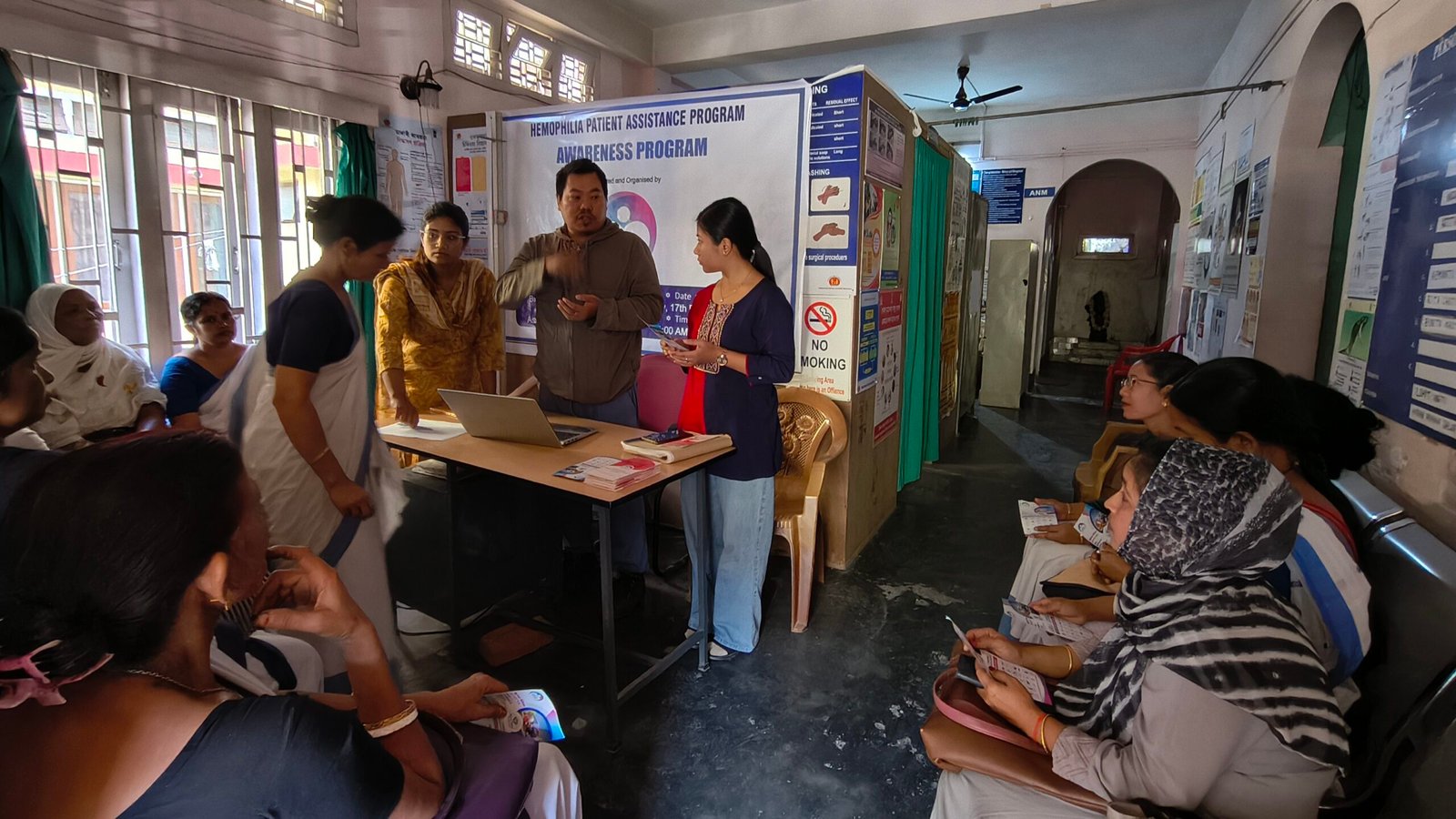
Guwahati: In an effort to strengthen grassroots healthcare awareness, Apna Ghar organized a Haemophilia Awareness Program at the Urban Primary Health Centre (UPHC), Birkuchi in Guwahati. The programme was specially designed for frontline ASHA workers and PHC staff who play a key role in connecting communities with healthcare services.
The initiative focused on improving understanding of haemophilia, a rare bleeding disorder, among community health workers. Resource persons provided detailed information on the causes, symptoms, types, diagnosis, and preventive care related to the condition. Special emphasis was laid on early detection, timely referral, and the important role ASHA workers can play in guiding families toward proper medical treatment.
The session was interactive and engaging. Participants actively shared their field experiences and discussed challenges faced while identifying suspected cases in rural and urban communities. Many ASHA workers said it was their first time receiving detailed knowledge about haemophilia and described the training as highly informative and useful.
By the end of the programme, the participants expressed greater confidence in identifying possible cases, counselling affected families, and ensuring timely referrals to higher medical centres. They also showed interest in spreading awareness in their respective areas to improve recognition and support for patients suffering from haemophilia.
The programme concluded with light refreshments arranged by the Transit Home staff, creating a friendly atmosphere that encouraged further interaction between the facilitators and participants.
Overall, the awareness drive successfully achieved its objective of capacity-building among frontline health workers and highlighted the importance of community-level awareness in managing rare diseases like haemophilia.