




” Growing Old is Mandatory, But Growing Up Is Optional”
Walt Disney
Social isolation and loneliness are prevalent, serious, and largely addressable health concern in older adults. Social isolation is an objective state defined by the absence of, or infrequent contact with other people, recognised by the World Health Organization as a significant social determinant of health. Whereas, loneliness is a subjective, unpleasant state arising from a perceived discrepancy between the social relationship a person had and those those they desire. Emotional loneliness is the absence of a close intimate relationship, characterized by feelings of emptiness and anxiety. Social loneliness is the perceived absence of a broader social network or community belonging. Approximately one forth of adults above 65 years are considered socially isolated while prevalence of loneliness varies from 20% to 43%
The key risk factors are bereavement and loss of occupational social network through retirement, reduced mobility or chronic illness limiting community participation, sensory impairment, particularly hearing loss, living alone, loss of transport independence, and cognitive decline. There is 32% increase in all cause mortality due to social isolation and 15% increased risk due to loneliness . Additional consequences includes a 50% increased risk of developing dementia and a 30% increased risk of coronary heart disease, depression. anxiety and suicidal ideation.
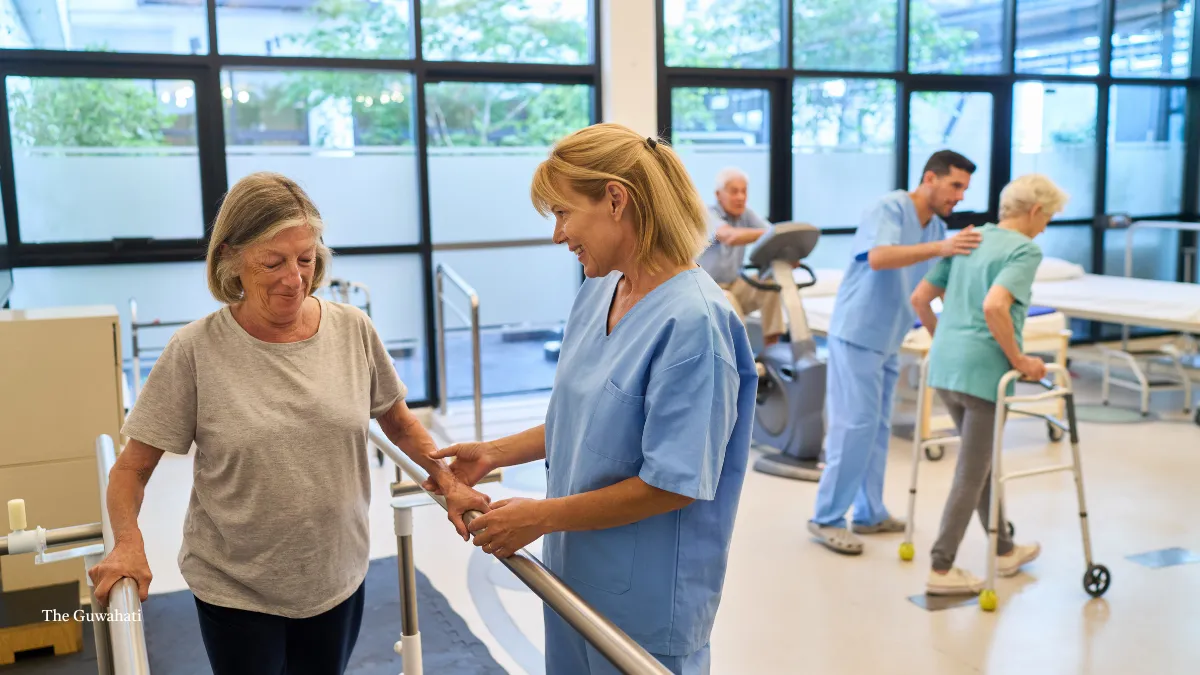
The geriatric physiotherapy is an emerging discipline to identify and respond to loneliness and social isolation in clinical practice. Geriatric Physiotherapy is a powerful antidote to both physical decline and emotional isolation, proving that moving the body can heal the heart. When the rehabilitation professionals address mobility, they simultaneously bridge the gap of human connection for seniors experiencing loneliness. The role involves identification, direct intervention, and referral. Once it is identified, group- based exercises reduce loneliness and social isolation. The consistent group contact, may reduce perceived loneliness independently of the physical activity itself. Allowing informal social time around structured exercise, prioritizing programmed accessible to those with mobility or transport barriers are important component of such programs. Live group -based video exercise provides meaningful social contact for household older adults However prerecorded delivery removes social component entirely. The Physiotherapist should assess digital literacy to ensure access is not a barrier. Referral to appropriate community services improve physical psychological, and social outcomes and reduce primary care utilization. Many of the programmes central to geriatric physiotherapy. assist in fall prevention by improving strength, balance and flexibility. Incorporating yoga and meditation can add to better outcome. As and when necessary psychological support integration in overall care is of paramount importance.
Regrettably, in many parts of our country such facilities for community participation of senior citizens are grossly inadequate. Though, there are many yoga studios are coming up. It is largely attracting young adults. The senior citizens should explore joining such studios for health and well. The social fabrics has changed considerably. The small nuclear families are the norms nowadays with consequent limitations. My wife participles online group yoga program of Sri Sri Ravi Sankar on every Sunday in addition to attending yoga studio three times a week. This provides opportunity for networking with wide varieties of people with diverse interest. There are associations of senior citizens in many places though activities are random in nature. The government should come up with robust policies towards these ends.