



Guwahati: The Eastern Himalayan Naturenomics™ Forum (EHNF) 2025, set for December 10–11, was announced today at Gauhati Town Club. The event will gather global sustainability leaders, diplomats, scientists, corporate executives, and youth innovators to promote ecological resilience and sustainable development across the Eastern Himalaya.
This year’s Forum will follow a multi-venue format across four top institutions in Assam — Gauhati University, IIT Guwahati, Cotton University, and Assam Royal Global University. Each campus will host special sessions on Sustainable Land Futures, Water and Energy, Forests and Biodiversity, and Sustainability and Social Entrepreneurship, increasing engagement with students, researchers, experts, and community groups.
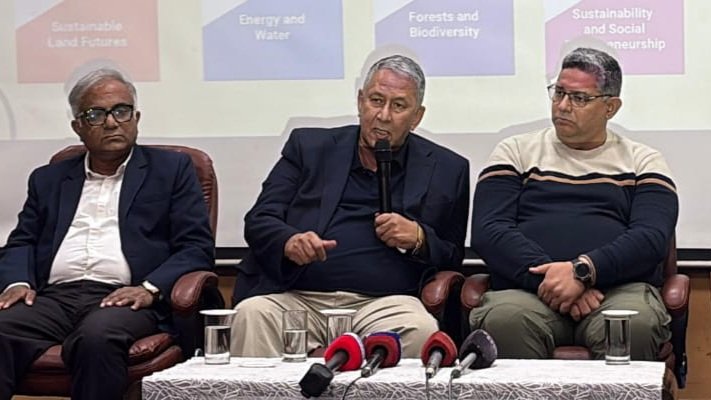
Key speakers at the press meet included Ranjit Barthakur, Founder Forester of Balipara Foundation, along with academic leaders from Gauhati University, Cotton University, and Assam Royal Global University. They stressed the importance of collaboration among academia, industries, and communities to address urgent ecological challenges in the Eastern Himalaya and encouraged youth participation in creating innovative conservation solutions.
EHNF 2025 will welcome national and international figures such as the Ambassador of Norway to India, senior experts from the Bhutan Trust Fund, Tata Steel, and TERI. Major companies like Tata Power, Google, NRL, Luminous, Schneider Electric, Coca-Cola, Mahindra Group, SEROS, HDFC Bank, and Axis Bank will join discussions on green innovation, sustainable business models, and nature-positive development.
Over two days, the Forum will explore nature-based solutions, climate-resilient infrastructure, circular economy practices, and youth-led environmental initiatives. The event aims to build strong links between development and ecological protection across the Eastern Himalaya and the larger Third Pole region.
The Balipara Foundation continues to lead efforts to create a resilient and inclusive ecological future by building partnerships among communities, academic institutions, government agencies, and industries to safeguard one of the world’s most important biodiversity hotspots.