
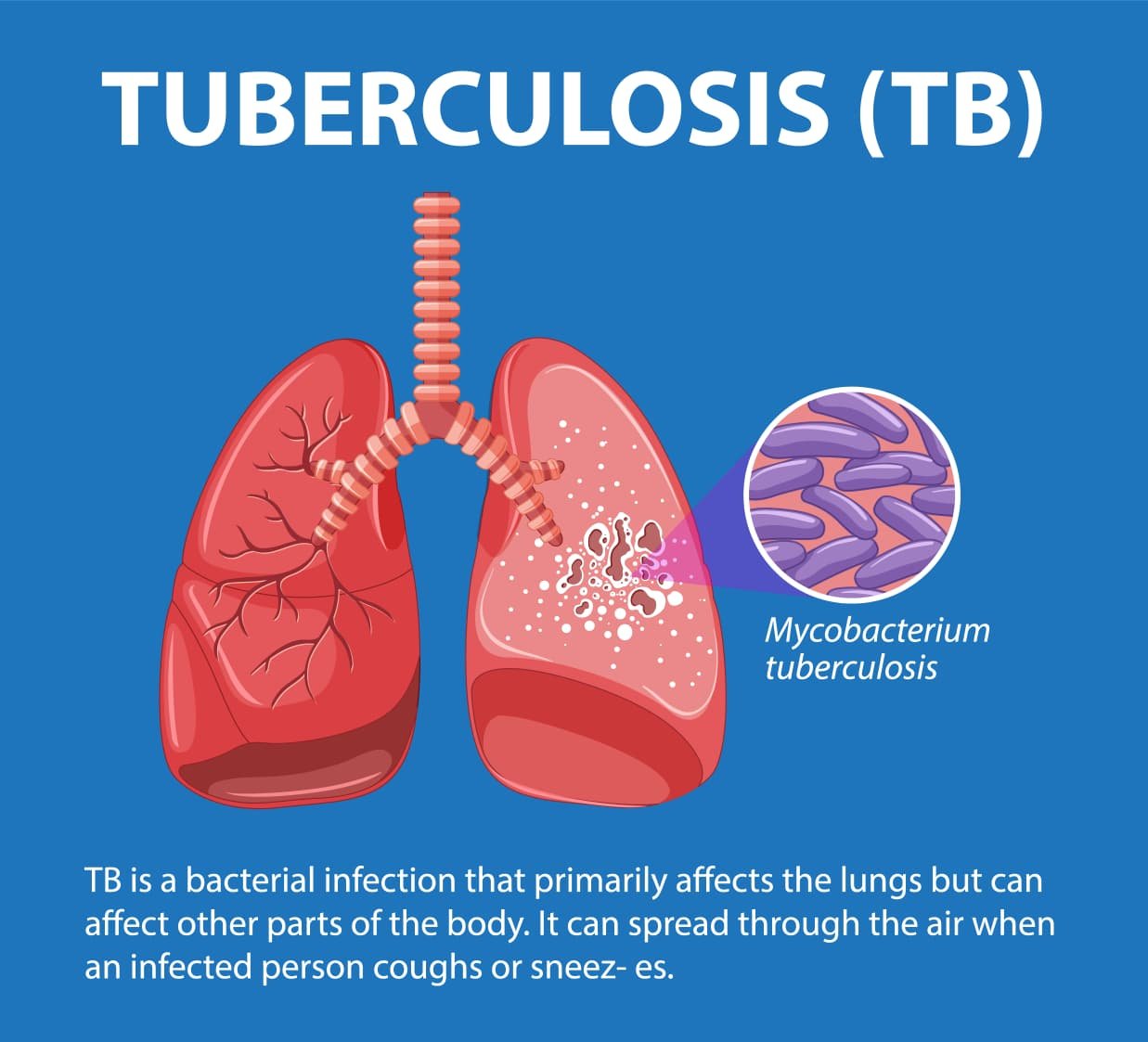


Guwahati: Tuberculosis (TB) continues to remain one of India’s major public health challenges despite being both preventable and curable. Health experts say delayed diagnosis, self-medication and social stigma are among the main reasons why the disease still affects a large number of people.
India accounts for nearly one-fourth of the global TB burden. Doctors say many patients ignore early symptoms and seek medical help only when the illness becomes serious.
Dr Asif Iqbal Hussain, Senior Consultant (Internal Medicine) at Peerless Hospital, Guwahati, said lack of awareness remains a major problem. “People often ignore symptoms like mild fever and persistent cough and take over-the-counter medicines. They usually visit a doctor only when severe symptoms such as coughing blood appear,” he said.
According to him, such delays not only worsen the patient’s condition but also increase the risk of spreading the infection to others. Many people initially blame symptoms on smoking, alcohol consumption, dust or air conditioning and expect the illness to go away on its own.
Health experts also warn that people with conditions such as uncontrolled diabetes, HIV, cancer or other diseases that weaken immunity are more vulnerable to TB.
Doctors say modern diagnostic tests have made detection faster. Dr Hussain noted that tests like CBNAAT can quickly confirm TB and detect Rifampicin resistance, which earlier took weeks through traditional culture methods.
However, doctors at Peerless Hospital Guwahati say many patients still arrive late for testing after weeks of self-medication, showing a gap between the start of symptoms and diagnosis.
“Diagnosis is now faster and more accurate, but people delay testing. Early detection and timely treatment can save lives and prevent the spread of the disease,” Dr Hussain said.
Dr Gautam Kumar Das, CEO of Peerless Hospital Guwahati, said TB remains a serious public health concern mainly because of lack of awareness and late diagnosis. “Our focus is not only on treatment but also on encouraging early screening and reducing stigma related to the disease,” he said.
Dr Hussain added that the COVID-19 pandemic highlighted the importance of preventive measures. “During COVID-19 we saw a dip in reported TB cases due to reduced testing, healthcare disruptions and increased awareness about hygiene and mask use. This shows basic precautions can help reduce transmission of infectious diseases,” he said.
Doctors are also concerned about the rise of drug-resistant TB. This often develops when patients stop treatment early or take medicines without proper medical supervision.
“If patients discontinue treatment midway when symptoms improve, it can lead to multi-drug resistant (MDR) or extensively drug-resistant (XDR) TB. These cases require longer and more complex treatment,” Dr Hussain explained.
Standard TB treatment usually lasts six months and is provided free of cost under government programmes such as the National TB Elimination Programme (NTEP) and initiatives like the Pradhan Mantri TB Mukt Bharat Abhiyaan. Doctors stress that completing the full course of treatment is essential.
“Even if symptoms improve within a few months, patients must complete the entire treatment. Incomplete treatment increases the risk of spread and drug resistance,” he said.
Experts also point out that although social stigma around TB has reduced over the years, it still discourages some people from seeking timely treatment.
Doctors emphasise that along with government programmes, greater public awareness and behavioural changes are necessary to control TB. They advise people to avoid overcrowded places, maintain hygiene and refrain from spitting in public areas.
As the country observes World TB Day, health experts say early diagnosis, proper treatment and awareness are key to reducing India’s TB burden.