





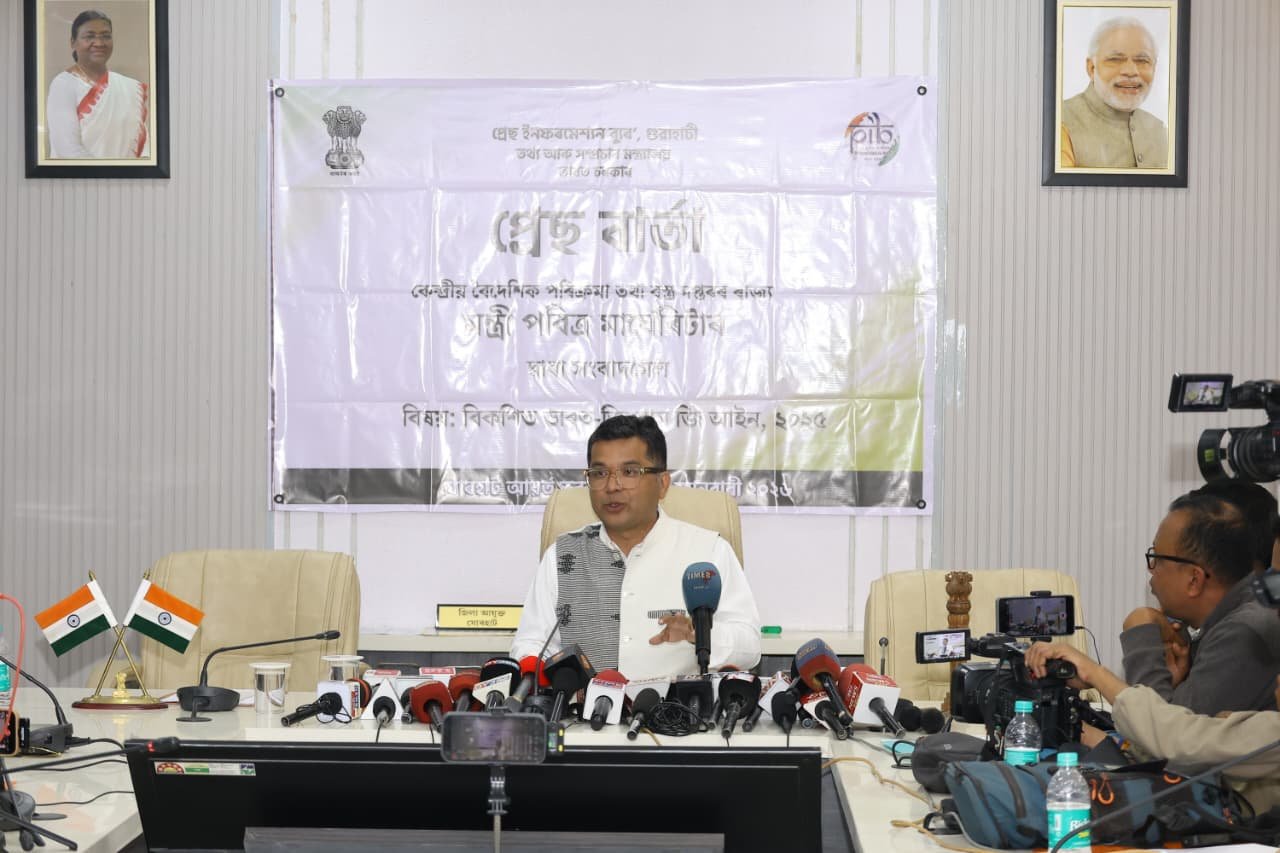
Jorhat: Union Minister of State for External Affairs and Textiles Pabitra Margherita on Thursday addressed a press conference at the Jorhat Circuit House, calling the Viksit Bharat – Guarantee for Rozgar and Ajeevika Mission (Gramin) [VB-G RAM-G] Act, 2025 a historic step towards building a developed India by 2047.
The minister said the new law marks a clear shift from a relief-based rural employment system to a productivity-focused approach, treating villages as centres of growth and economic activity. He said the policy aims to ensure dignity of labour and long-term livelihood security instead of temporary support.
Margherita explained that the transition from MGNREGA to VB-G RAM-G was necessary due to weaknesses in the earlier system. Over time, problems such as fake job cards, ghost beneficiaries, delayed payments and poor-quality asset creation had affected the scheme. Repeated audits, he said, showed the need for a complete reform.
Highlighting changes in rural India, the minister said policies designed two decades ago cannot meet today’s needs. With better roads, digital access, banking facilities and reduced poverty levels, a new and more efficient employment framework was required.
Under the VB-G RAM-G Act, 2025, guaranteed wage employment has been increased from 100 to 125 days per rural household. The Act also introduces a 60-day pause on public works during peak sowing and harvesting seasons, ensuring that farmers get sufficient labour when needed.
To address wage delays, the new law mandates weekly payments or payments within a maximum of 14 days, with automatic compensation if payments are delayed. The scheme will use digital systems and AI-based monitoring to prevent fraud and eliminate fake beneficiaries.
On funding, Margherita said the scheme follows a 60:40 Centre–State funding pattern, while Assam and other North-Eastern and Himalayan states will receive 90:10 funding support, considering regional challenges.
He also said that unlike earlier scattered works, the new Act focuses on four clear areas — water security, core rural infrastructure, livelihood-related assets and climate resilience — to ensure durable and useful asset creation.
Concluding, the minister said the VB-G RAM-G Act represents a strong move towards productive rural growth, ensuring that villages play a key role in India’s journey towards becoming a developed nation by 2047.